Primary research
Two Phases of Research
The project was unique because research and design were conducted in two phases between February 2022 and June 2023. The first phase was research with people utilizing FHEO services while the second phase focused on the staff and FHEO processes. We used human-centered research and design methods to uncover complaint insights and generate solutions to improve customer experience. This included complainant interviews, concept development based on customer insight, and co-design activities with staff.
Research with People Who Used FHEO Services
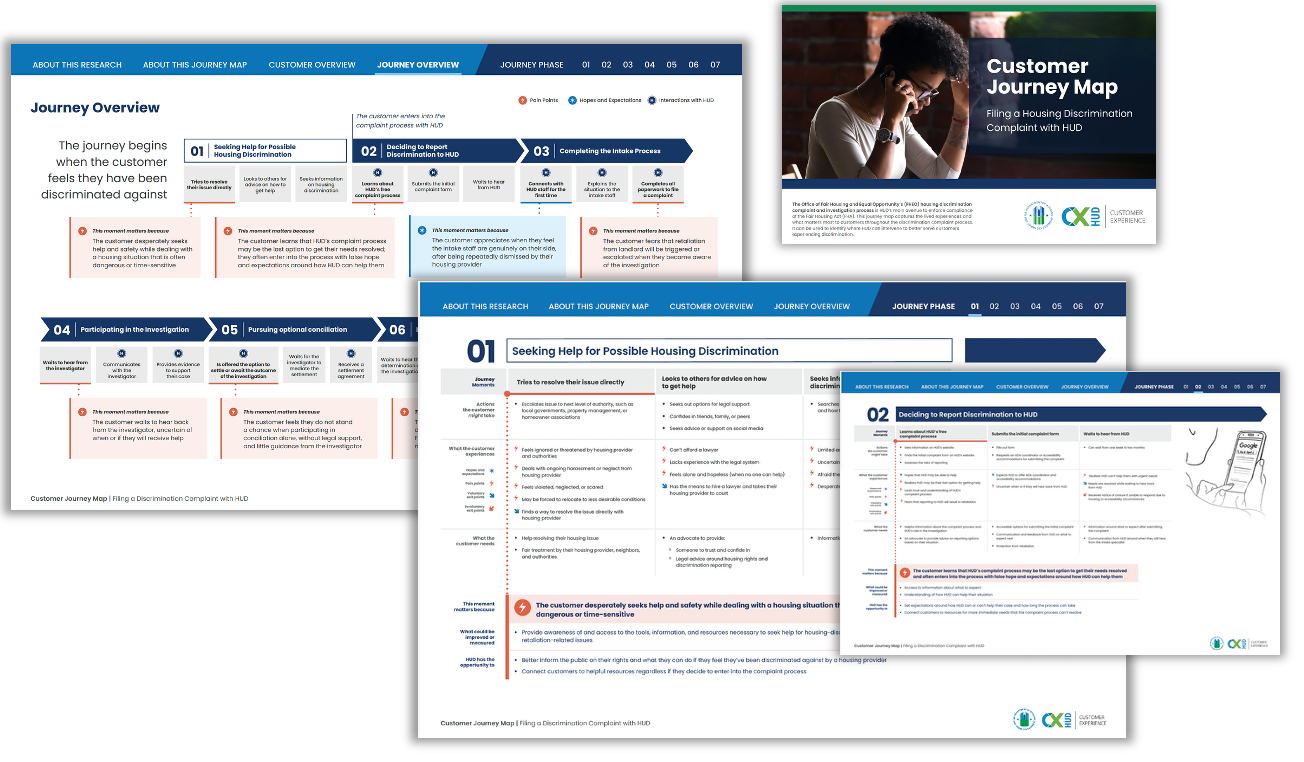
The team interviewed 23 HUD customers of diverse backgrounds who filed a complaint in the past two years. The CX team chose the one-on-one interview format to deeply understand each customer’s history with discrimination and their experience with the housing discrimination complaint process. Phases of the complaint process served as an outline for the questions inviting further conversation. After the interviews, the team used findings to map the complaint process from the customers collective point of view.
Key Insights:
Hearing directly from customers uncovered known (and unknown) barriers they frequently face when pursuing a fair and accessible investigation.
1️⃣ Power Imbalance – Underlying power imbalances and unmet customer needs with the complainant often place them at a disadvantage. Many customers don’t have a chance at a fair investigation because of the vulnerable situation they’re in when they contact HUD. They may be living in fear of losing their home or feel threatened by their housing provider (retaliation).
2️⃣ Navigating Legal Processes – After trying every other option, they come to HUD, often in survival mode and desperate for help. Then, they must navigate a legal process they don’t fully understand without legal counsel. This experience can make customers feel powerless and disadvantaged.
3️⃣ Unsupported and Hopeless – Many customers wait out the process, only to find that HUD can’t help their situation. They usually find this out through a formal letter or e-mail, and they often don’t understand why HUD rejected their complaint. When this happens, they leave the process feeling dismissed, hopeless, and lose trust in HUD and the federal government.
Research with Staff
After speaking directly with complainants, it became clear that because many entered the process under unstable living conditions, or are at risk of losing their home, they are likely in a state of trauma, which can prevent them from effectively navigating the process and advocating for themselves.
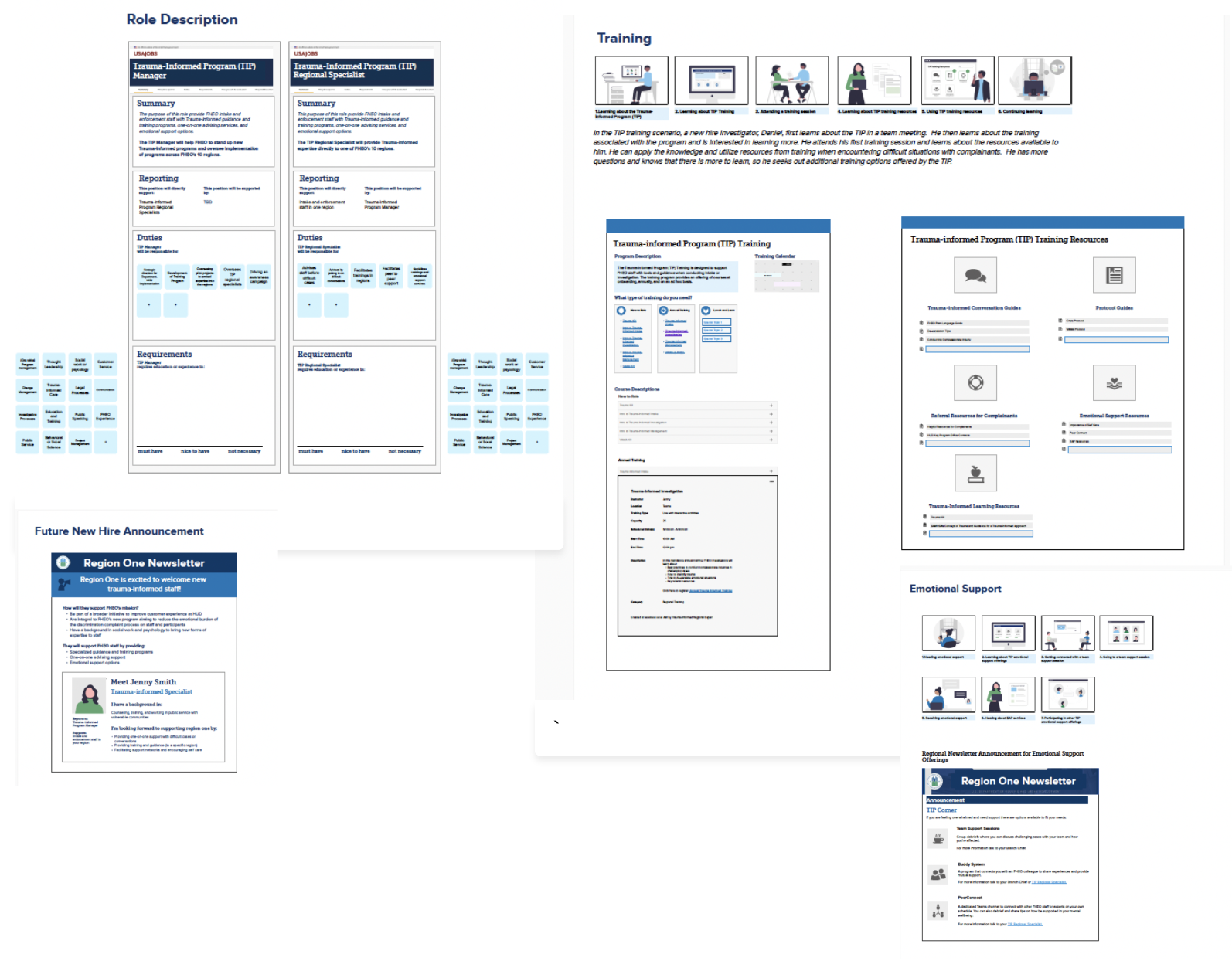
Based on this key insight, we embarked on research with staff and on a design project to focus on solutions for FHEO to better respond and engage with people experiencing trauma.
Key Insights:
1️⃣ Staff are not formally trained to work with survivors of trauma and are eager to learn: staff need practical guidance
2️⃣ Staff worked on cases that they may not know how to navigate: staff need an expert’s advice
3️⃣ Staff are emotionally impacted by work they do: staff need help with secondary trauma